
"AI-powered discovery for scientific research"
- 4 ratings
- 4.5
- Monthly users
- 6.7M
- Pricing
- Free
- Platform
- Web App / API
- Best for
- Scientists / Educators
Overview
Semantic Scholar is a free, AI-powered academic search and reading platform developed by the Allen Institute for AI that helps researchers discover, evaluate, and understand scientific literature across disciplines through AI features including TLDR summaries, an augmented PDF reader, citation mapping, and personalized research feeds, with access to over...
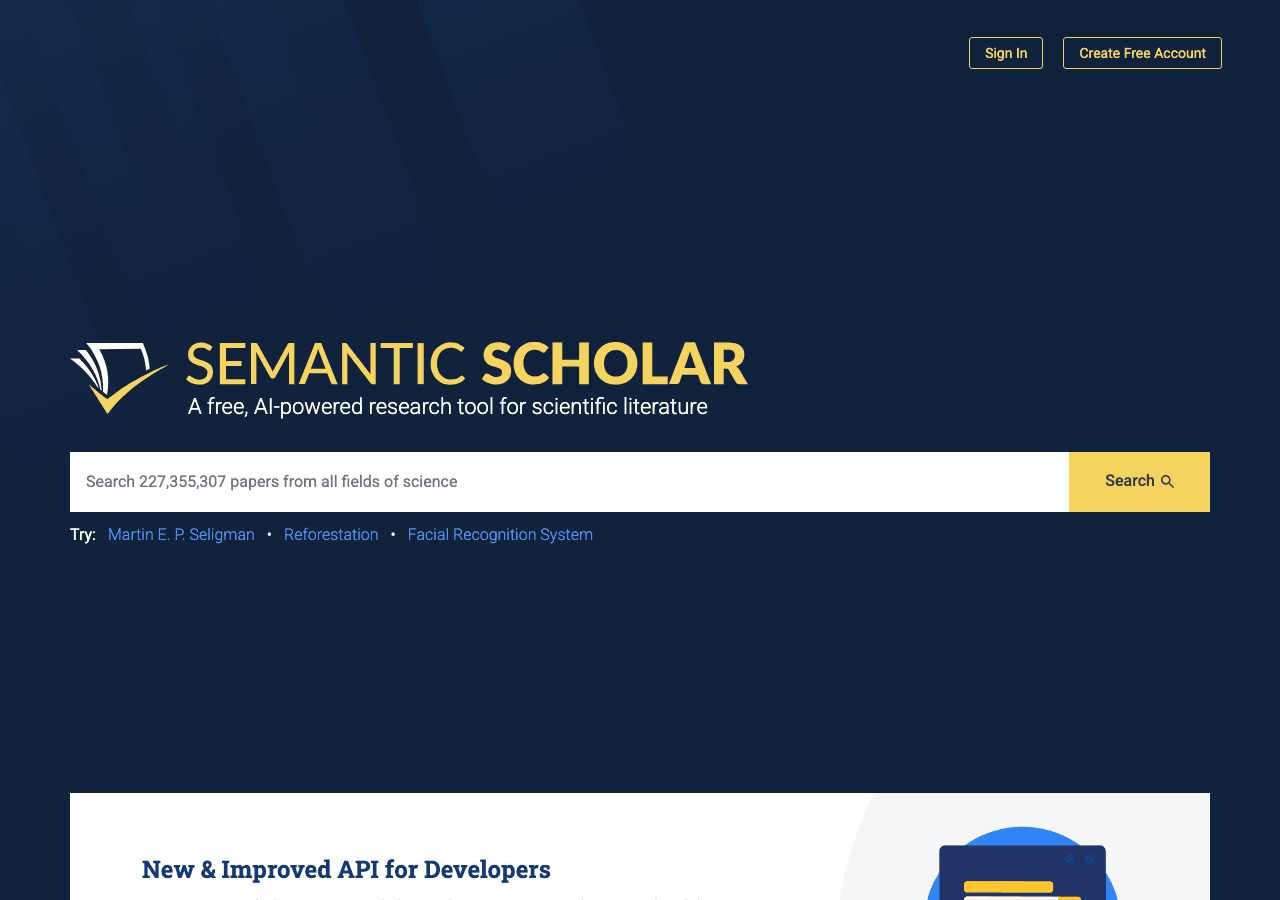
AI-powered discovery for scientific research
Key Features
Automation-ready endpoints
The API lets teams extend workflows programmatically and connect existing apps with minimal friction.
Multi-language SDK support
2 SDKs (e.g., Python and JavaScript/TypeScript) help dev teams launch prototypes quickly.
Insights & analytics
Semantic Scholar consolidates data to expose actionable insights quickly. Semantic Scholar can support reporting workflo
Video Showcase
Rate this Tool
About Semantic Scholar
“AI-powered discovery for scientific research”
Semantic Scholar Snapshot
Key facts we track so you can judge fit before visiting the provider.
- Primary category
- Scientific Research
- Best fit
- Scientists, Educators, Students
- Platforms
- Web App, API
- Pricing signal
- Free
- Provider context
- Semantic Scholar - US
- Known integrations
- Semantic Scholar
- Developer access
- API documentation, Python, JavaScript/TypeScript
- Data handling
- Global hosting, Privacy policy linked
Before you choose Semantic Scholar
- Confirm Semantic Scholar's current limits, renewal terms, and seat pricing on the official site.
- Review privacy, retention, and data-processing terms before using sensitive data.
- Test the integrations or API path against one real workflow before rollout.
- Make sure the supported platform matches where your team actually works.
Listing data is compiled from structured provider information, public signals, submissions, and periodic checks where available. Treat this page as a shortlist aid, then verify pricing, compliance, and product limits with the provider before making a business-critical decision.
How Semantic Scholar Works
Understanding the core functionality and approach of Semantic Scholar.
Semantic Scholar meters activity so invoices mirror real adoption instead of seat assumptions. Experiments can scale without renegotiating budgets every quarter. Usage-based billing in Semantic Scholar makes cost modeling important before production rollout.
Key Features
Explore what makes Semantic Scholar stand out.
Automation-ready endpoints
The API lets teams extend workflows programmatically and connect existing apps with minimal friction.
Multi-language SDK support
2 SDKs (e.g., Python and JavaScript/TypeScript) help dev teams launch prototypes quickly.
Insights & analytics
Semantic Scholar consolidates data to expose actionable insights quickly. Semantic Scholar can support reporting workflows, but teams should validate source data and export options.
Use Cases
Discover how different audiences leverage Semantic Scholar.
Launch faster as a startup
The free tier means startups can validate ideas before committing budget to tools. Semantic Scholar plugs into Semantic Scholar so data stays in sync.
Insight generation
Analysts use Semantic Scholar to assemble data, explore patterns, and publish findings faster.
FAQ about Semantic Scholar
What is Semantic Scholar and what does it do?
How much does Semantic Scholar cost?
Is Semantic Scholar secure and compliant with data privacy regulations?
What platforms does Semantic Scholar support?
How can I try Semantic Scholar before purchasing?
What file formats does Semantic Scholar support?
Who develops and maintains Semantic Scholar?
How do I get access to Semantic Scholar?
How is usage measured and billed in Semantic Scholar?
What deployment options does Semantic Scholar offer?
Related AI News & Insights
Stay updated with the latest news and insights about Semantic Scholar and the AI industry.
AWS TorchNeuron Challenges Nvidia CUDA Dominance with PyTorch on Trainium Chips
Compare Similar Tools
See how Semantic Scholar stacks up against similar alternatives in the market.


Keep Semantic Scholar's listing accurate
Providers can update product facts, pricing context, screenshots, and launch notes. Paid placements are labeled separately and do not replace editorial or data-quality review.
How to Evaluate Semantic Scholar
Compare Semantic Scholar with Google Scholar, Elicit, Scite and other alternatives before you decide. The goal is not to pick the most popular product; it is to find the tool that fits your actual workflow, risk level, and budget.
- Step 1Test Semantic Scholar with one real workflow before moving important work into it.
- Step 2Model the full monthly cost at your expected usage, including seats, limits, and overages.
- Step 3Verify the integration path with your existing stack before you commit.
- Step 4Review privacy, retention, and compliance terms before using sensitive data.
Use the video walkthrough to check whether the interface matches the claims. For developer teams, inspect the Python SDK and JavaScript/TypeScript support. Review the API documentation for auth, rate limits, errors, and export behavior. For broader context, browse more scientific research tools for scientists, or compare this page against the category hub. New to AI tool evaluation? Start with AI Tool Navigator.
Share Semantic Scholar
Help others discover Semantic Scholar by sharing it on your favorite platforms.
Report an Issue
Found incorrect information or have concerns about Semantic Scholar? Let us know.
Need a tool shortlist for a real business use case?
Get a structured 3-5 tool recommendation, pricing comparison, and implementation roadmap for your team.