
- Favorites
- 1
- Pricing
- Free
- Platform
- Web App / API
- Best for
- Content Creators
Overview
Audioread converts articles, newsletters, PDFs, and web links into natural-sounding audio using text-to-speech, delivered as a private podcast feed you can listen to in any standard podcast app (Apple Podcasts, Overcast, etc.) via RSS.
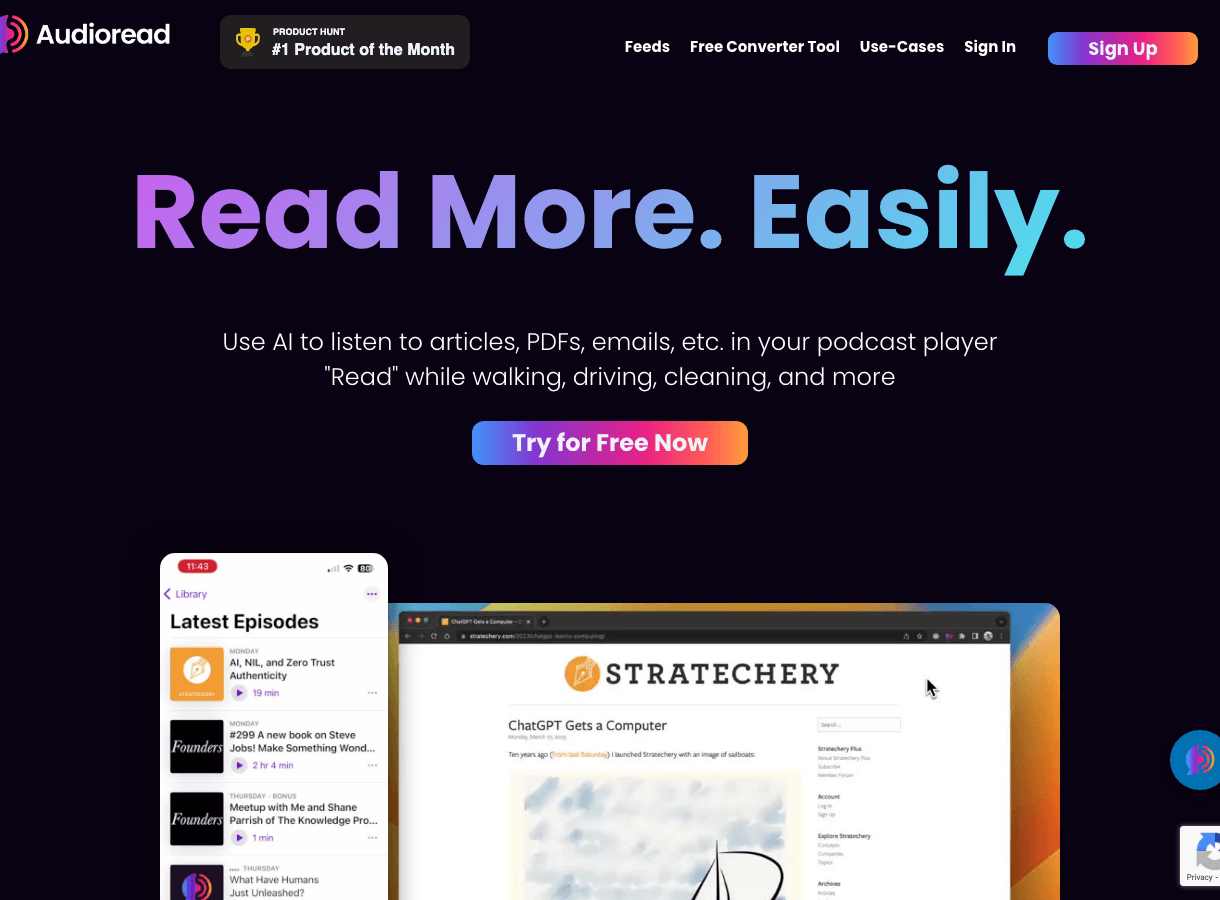
Listen to your reading list
Key Features
Production-ready output
Output is compatible with major DAWs, video editors, and podcast platforms.
Work anywhere with Audioread
Consistent experience across 3 platforms means faster adoption and fewer training needs.
Developer-friendly API
Webhook and API support keep Audioread aligned with bespoke internal processes.
Client libraries available
2 SDKs (e.g., Python and JavaScript/TypeScript) help dev teams launch prototypes quickly.
Rate this Tool
Be the first to rate this tool!
About Audioread
“Listen to your reading list”
Audioread Snapshot
Key facts we track so you can judge fit before visiting the provider.
- Primary category
- Audio Generation
- Best fit
- Content Creators
- Platforms
- Web App, API, Mobile App
- Pricing signal
- Free
- Provider context
- Audioread - US
- Developer access
- API documentation, Python, JavaScript/TypeScript
- Data handling
- Global hosting, Privacy policy linked
- Evidence signals
- 16K monthly visits, 1 community favorites
Before you choose Audioread
- Confirm Audioread's current limits, renewal terms, and seat pricing on the official site.
- Review privacy, retention, and data-processing terms before using sensitive data.
- Test the integrations or API path against one real workflow before rollout.
- Make sure the supported platform matches where your team actually works.
What to verify
- Exact plan limits, overage costs, and renewal terms are not fully captured here.
Listing data is compiled from structured provider information, public signals, submissions, and periodic checks where available. Treat this page as a shortlist aid, then verify pricing, compliance, and product limits with the provider before making a business-critical decision.
How Audioread Works
Understanding the core functionality and approach of Audioread.
Audio creation with Audioread starts from a text description and delivers production-ready output. Musicians, podcasters, and content teams use it to prototype ideas and produce final assets. Audioread serves two audiences: Web App, API, and Mobile App apps for daily use, plus Python and JavaScript/TypeScript SDKs for custom builds.
Key Features
Explore what makes Audioread stand out.
Production-ready output
Output is compatible with major DAWs, video editors, and podcast platforms.
Work anywhere with Audioread
Consistent experience across 3 platforms means faster adoption and fewer training needs.
Developer-friendly API
Webhook and API support keep Audioread aligned with bespoke internal processes.
Client libraries available
2 SDKs (e.g., Python and JavaScript/TypeScript) help dev teams launch prototypes quickly.
Use Cases
Discover how different audiences leverage Audioread.
Launch faster as a startup
Entrepreneurs use Audioread to automate tasks that would otherwise require hiring, from content to analysis.
Distributed team workflows
Cross-platform sync ensures work started on one device continues seamlessly on another.
Streamline creative processes
Content Creators rely on Audioread to keep content volume high—templates, collaboration, and AI help hit deadlines without extra headcount.
FAQ about Audioread
What is Audioread and what does it do?
How much does Audioread cost?
Is Audioread secure and compliant with data privacy regulations?
What platforms does Audioread support?
How can I try Audioread before purchasing?
What file formats does Audioread support?
Who develops and maintains Audioread?
How do I get access to Audioread?
How is usage measured and billed in Audioread?
What deployment options does Audioread offer?
Compare Similar Tools
See how Audioread stacks up against similar alternatives in the market.


Keep Audioread's listing accurate
Providers can update product facts, pricing context, screenshots, and launch notes. Paid placements are labeled separately and do not replace editorial or data-quality review.
How to Evaluate Audioread
Compare Audioread with Speechify, NaturalReader and other alternatives before you decide. The goal is not to pick the most popular product; it is to find the tool that fits your actual workflow, risk level, and budget.
- Step 1Test Audioread with one real workflow before moving important work into it.
- Step 2Check current pricing, limits, and renewal terms directly with the provider.
- Step 3Verify the integration path with your existing stack before you commit.
- Step 4Review privacy, retention, and compliance terms before using sensitive data.
For developer teams, inspect the Python SDK and JavaScript/TypeScript support. Review the API documentation for auth, rate limits, errors, and export behavior. For broader context, browse more audio generation tools for content creators, or compare this page against the category hub. New to AI tool evaluation? Start with AI Tool Navigator.
Share Audioread
Help others discover Audioread by sharing it on your favorite platforms.
Report an Issue
Found incorrect information or have concerns about Audioread? Let us know.
Need a tool shortlist for a real business use case?
Get a structured 3-5 tool recommendation, pricing comparison, and implementation roadmap for your team.