The Global Artificial Intelligence Ecosystem: An International Press Digest for 26 March 2026

The artificial intelligence landscape on March 26, 2026, has reached a definitive point of maturation, characterized by a fundamental shift from speculative generative experimentation toward the rigorous execution of agentic workflows and industrial-scale infrastructure. Today’s ecosystem is no longer defined by the mere ability of machines to mimic human speech or imagery, but by their capacity to operate autonomously within complex enterprise environments, governed by hardening regulatory frameworks like the European Union’s AI Act and a new era of fiscal accountability.[1, 2, 3] As the "side quest" era of viral AI novelties concludes—symbolized by the abrupt shuttering of high-profile consumer video platforms—the focus has moved toward "Cognitive Sovereignty," where the mastery of foundational hardware and the precision of patent-protected invention define the true leaders of the Intelligence Age.[4, 5, 6] Why this matters: This transition signals the end of the first generative hype cycle and the beginning of a high-stakes era where only organizations capable of delivering measurable, scalable, and compliant value will survive the tightening of global capital and computing resources.
The Clarivate AI50 and the Geopolitics of Precision Invention
The release of the Clarivate AI50 today marks a significant milestone in how innovation leadership is quantified in the 2026 market, moving beyond simple volume-based metrics to focus on the technical impact and strategic rarity of AI inventions.[4] This data-driven benchmark, derived from the Derwent World Patents Index, identifies the top 0.5% of AI inventions globally, emphasizing a shift from broad-scale research to "Precision Innovation".[4, 7] The cohort of 52 organizations reflects a highly concentrated center of gravity for the world's most valuable ideas, with 80% of these leaders headquartered in just four regions: Mainland China, the United States, South Korea, and Japan.[4] Why this matters: The geographic concentration of high-impact AI patents suggests that the global "intelligence race" is narrowing into a four-way competition, where the ability to protect intellectual property is as critical as the underlying technology itself.
The 2026 benchmark highlights a clear distinction between "Foundational Leaders" and "Domain-Focused Innovators," with the former group dominated by hardware giants and model architects like NVIDIA, Micron Technology, Alphabet, and Qualcomm.[4] These organizations are credited with creating the foundational capabilities—such as advanced model architectures and high-bandwidth memory systems—that allow the rest of the ecosystem to function.[4] For example, the presence of Foxconn and Huawei alongside Western firms like Microsoft and IBM illustrates the persistent interdependence of the global hardware supply chain, despite ongoing geopolitical tensions.[4] Why this matters: The dominance of hardware providers in the AI50 indicates that the industry's most valuable intellectual property remains rooted in the physical layer of the stack, rather than in the ephemeral applications that sit on top of it.
In contrast, domain-focused innovators such as Accenture, Alibaba, ByteDance, and Tata Consultancy Services are recognized for their ability to translate these foundational capabilities into complex, high-impact systems for enterprise and social use.[4] Philips, specifically noted for its application of AI in medical technology and patient care, represents the growing importance of verticalized AI that solves industry-specific problems.[4] The report also emphasizes the significant role of publicly funded research, with institutions like KAIST and ETRI representing a large share of the leadership in AI fundamentals.[4] Why this matters: The inclusion of academic and government research centers as top innovators underscores that the most critical AI breakthroughs still rely on long-term, non-commercial research, which eventually feeds the pipelines of the commercial giants.
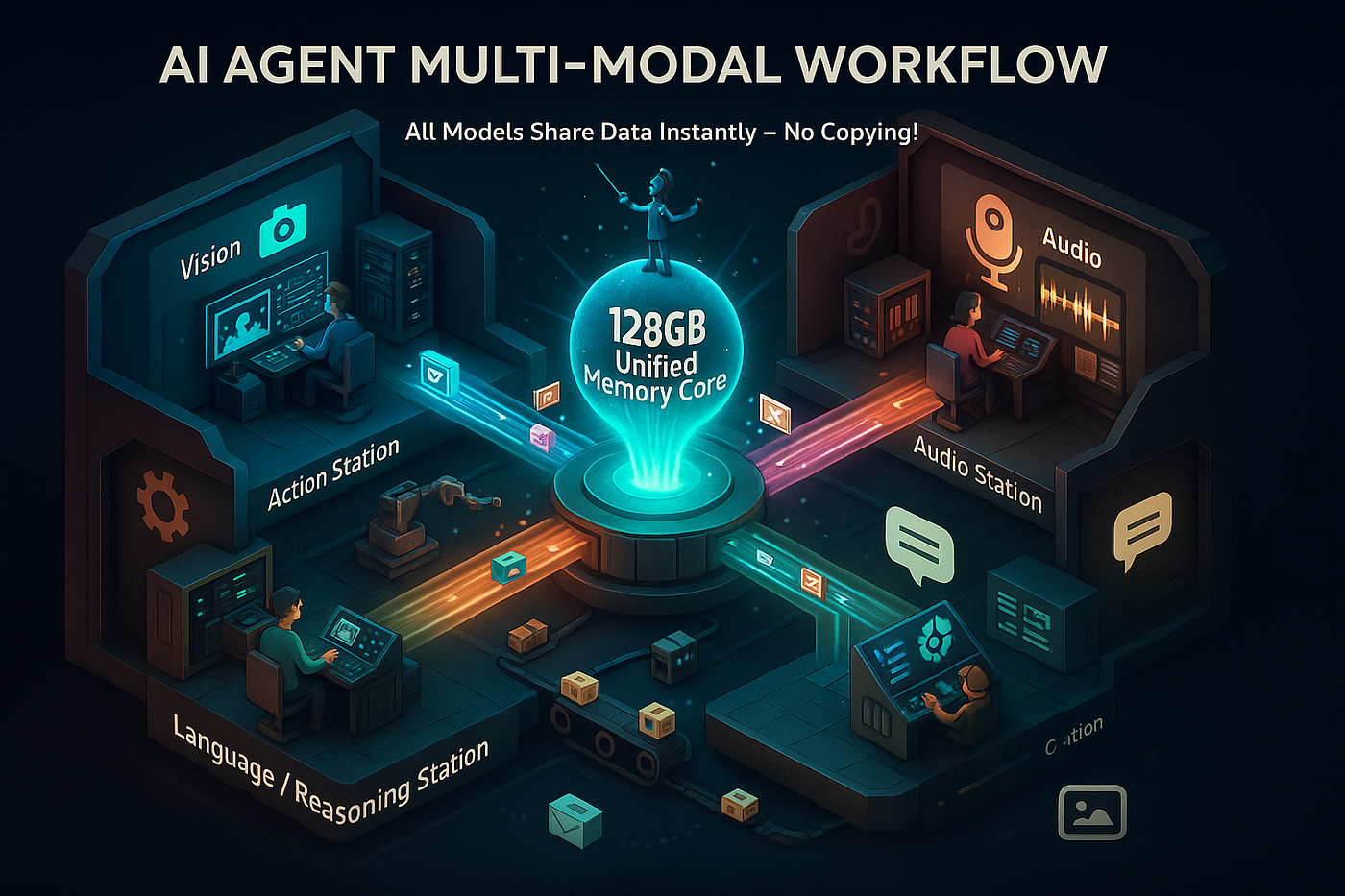
Clarivate AI50: Geographic Concentration of AI Innovation Leadership (2026) | Headquarters Region | Number of Top-Tier Organizations | Key Innovation Focus |
|---|---|---|---|
Mainland China | East Asia | 15 | Domain Translation / Enterprise Systems |
United States | North America | 14 | Foundational Models / Cloud Infrastructure |
South Korea | East Asia | 6 | Semiconductor Memory / Telecommunications |
Japan | East Asia | 6 | Robotics / Industrial Automation |
Other (EU/Taiwan/etc.) | Global | 11 | Specialized Hardware / Precision MedTech |
The methodology used for the AI50, leveraging the Derwent Strength Index, measures technical impact, success, and investment, revealing that many of these leaders are the same organizations identified in the broader Top 100 Global Innovators 2026 list.[4, 7] This intersection suggests that AI has become the primary driver of innovation across all sectors, rather than a standalone category.[7] The findings indicate that filings have doubled repeatedly since 2019, with more than one million invention specifications published by mid-2025, yet the Top 100 innovators account for 16% of the world's strongest AI inventions.[7] Why this matters: This disparity shows that while the quantity of AI research is exploding, the "quality gap" is widening, making precision and strategic intent the defining characteristics of true market leadership.

The Agentic Shift: Mobile Intelligence and Enterprise Autonomy
As demonstrated at MWC 2026, the mobile ecosystem is undergoing a fundamental transformation as Samsung advances "Galaxy AI" into the realm of truly agentic companions.[8] The newly launched Galaxy S26 series, powered by the Snapdragon 8 Elite Gen 5, represents the third generation of AI-native phones designed to move beyond simple features toward intuitive, background-running agents.[8] These devices utilize advanced hardware, including a redesigned Vapor Chamber on the S26 Ultra, to support the thermal demands of flagship AI capabilities that execute tasks without explicit user prompts.[8] Why this matters: The integration of agentic AI into the palm of the consumer’s hand marks a shift from "AI as a tool" to "AI as a ghostwriter" for daily life, where the device predicts needs and manages workflows seamlessly across a connected ecosystem.
Features like "Now Nudge" exemplify this transition by analyzing text message prompts and image content to provide context-aware suggestions across platforms like WhatsApp, Google Messages, and Instagram.[8] Furthermore, the evolution of productivity tools like "Circle to Search" and the new "Creative Studio" on the Galaxy Book6 series indicates that AI is no longer a localized mobile feature but a distributed intelligence layer across laptops, tablets, and wearables.[8] However, this expansion comes with caveats regarding accuracy and the need for watermarking, as Samsung now overlays visible watermarks on AI-generated images to maintain transparency.[8] Why this matters: The widespread adoption of technical watermarking and "Privacy Display" features shows that manufacturers are increasingly concerned with the social and security implications of ubiquitous, agent-driven content creation.
In the corporate sphere, the "2026 Artificial Intelligence Excellence Awards" have recognized FPT Software for its leadership in the "Agentic AI" category with its IvyChat platform.[1] Unlike standard chatbots, IvyChat is an enterprise-grade agentic platform designed for regulated industries like banking and insurance, where it combines knowledge-grounded LLMs with omnichannel delivery and deep system integration.[1] This platform reflects the industry's movement toward an "AI-augmented workforce," where digital workers perform end-to-end business processes within governed environments.[1] Why this matters: For global enterprises, the move to agentic AI represents the next phase of digital transformation, where intelligence is embedded directly into decision-making and execution cycles rather than existing as an isolated application.
The rise of agentic AI is described by industry leaders as the "Intelligence Transformation," which follows the previous cycles of digital and green transformation.[1] This transformation is not merely about automation but about "autonomous intelligence"—the ability of systems to observe, plan, and act with varying levels of autonomy.[1, 2] Organizations like FPT are positioning themselves to help clients apply this new generation of AI at scale, focusing on "practical AI" that solves real problems and earns user trust through measurable results.[1] Why this matters: As the market for generative AI matures, the focus is shifting away from what looks impressive in a demo toward what delivers measurable business value and operational efficiency in high-stakes environments.
The Evolution of Agentic Capabilities (2026) | Feature / Platform | Primary Mechanism | Strategic Impact |
|---|---|---|---|
Mobile Autonomy | Samsung Galaxy S26 | Background Reasoning (Now Nudge) | Proactive Personal Assistance |
Enterprise Logic | FPT IvyChat | Integrated Workflow Execution | Autonomous "Digital Workers" |
Software Engineering | Claude Code / Codex | Planning and Multi-Agent Loops | Reduced Development Lifecycle |
Social Integration | Tencent ClawBot | OpenClaw on WeChat | Mass-Market Task Delegation |
The competition for agentic dominance is particularly fierce in the Chinese market, where Tencent has launched "ClawBot," an open-source agent based on the "OpenClaw" architecture integrated directly into WeChat.[9] This allows over a billion monthly active users to delegate tasks such as file transfers and email management to an AI agent acting as a contact.[9] Baidu and Alibaba have launched similar initiatives, with Baidu releasing a series of OpenClaw-based agents across multiple device platforms and Alibaba focusing on enterprise-grade coordination with its "Wukong" platform.[9] Why this matters: The rapid adoption of AI agents in the world’s largest social and enterprise ecosystems suggests that the "agentic interface" will soon replace traditional app navigation as the primary way users interact with technology.
The OpenAI Strategic Reset: Shuttering Sora and the "Side Quest" Philosophy
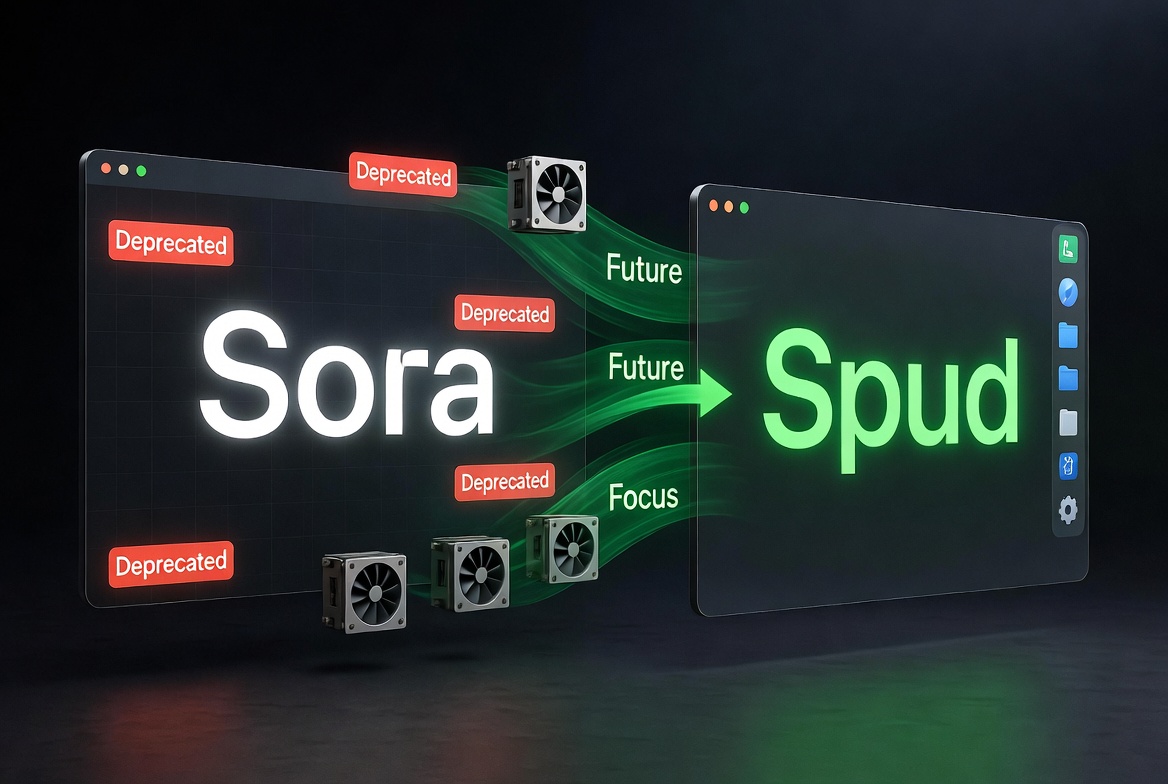
One of the most disruptive developments of today is the final confirmation of OpenAI’s massive strategic pivot, marked by the shutdown of its Sora video-generation platform and the termination of its $1 billion partnership with Disney.[10, 11, 12] Sora, which once represented the pinnacle of generative video technology, is being discontinued as OpenAI redirects its finite computing resources—specifically high-end GPUs—toward its enterprise business and the development of its new "Spud" AI model.[6, 11] This decision reflects a "major reset" within the company, as leadership moves away from "side quests" that were deemed distractions from core revenue-generating goals.[6] Why this matters: OpenAI’s retreat from the consumer video market signals a broader industry realization that the compute-intensive nature of high-fidelity media generation is currently incompatible with the requirements for corporate profitability and scale.
The collapse of the Disney partnership is particularly notable, as it was slated to involve a $1 billion equity investment and the licensing of over 200 iconic characters for use in the Sora ecosystem.[13, 14] While the deal would have allowed users to legally create content featuring characters from Marvel, Star Wars, and Pixar, it ultimately failed due to the high resource costs and persistent challenges with content moderation and copyright infringement.[11, 14] Critics had labeled Sora an "AI slop-filled platform" as user engagement plummeted from over 3.3 million downloads in late 2024 to just 1.1 million by February 2026.[6] Why this matters: The failure of the Sora-Disney alliance serves as a cautionary tale for the media industry, proving that even the most powerful intellectual property cannot overcome the fundamental economic and ethical hurdles of uncontrolled generative AI.
OpenAI’s leadership, including CEO Sam Altman and chief of applications Fidji Simo, has emphasized the need to refocus on "business customers" to close the gap with rivals like Anthropic.[6] Anthropic’s disciplined "enterprise-first" approach with tools like Claude Code and Cowork has reportedly put pressure on OpenAI to professionalize its product suite.[6, 9] This reset includes the development of a unified desktop "super-app" that integrates ChatGPT, programming tools, and a web browser, moving away from standalone creative experiments like Sora.[11] Why this matters: The "professionalization" of OpenAI suggests that the era of the viral AI startup is being replaced by a more conventional corporate race for the "operating system of the future."
The strategic shift also impacts OpenAI’s e-commerce ambitions, as the company is moving away from its "Instant Checkout" feature in ChatGPT to focus instead on product discovery.[6] This change allows merchants to use their own checkout experiences while OpenAI focuses on the top of the funnel—the "Discovery" phase where AI agents are most effective.[6] Furthermore, the Sora research team is expected to pivot to "world-simulation and robotics," suggesting that while the consumer app is dead, the underlying technology will be repurposed for physical AI applications.[6] Why this matters: By shedding non-core consumer features, OpenAI is attempting to build a more defensible moat in the enterprise sector, where the demand for reliable, autonomous reasoning far outweighs the demand for creative video generation.
OpenAI Strategic Reallocation (March 2026) | Discontinued / Deprecated | Future Growth Focus |
|---|---|---|
Core Product | Sora (Video App) | Spud (New Model) / Codex |
Interface | Instant Checkout (Retail) | Unified Desktop "Super-App" |
Strategic Focus | Consumer Social / Virality | Enterprise Productivity / Robotics |
Infrastructure | Video-Centric GPU Clusters | Logic-Centric Reasoning Factories |
The industry's reaction to the Sora shutdown has been mixed, with some analysts viewing it as a necessary step toward an IPO and others seeing it as a failure to monetize one of the most promising technologies of the decade.[12] Forrester analyst Thomas Husson noted that Sora was a "resource black hole" with "limited monetization" that struggled to prevent misinformation and copyright infringement.[12] The decision may have been timed to minimize risks ahead of a potential stock launch, as pressure from investors for a path to profitability reaches an all-time high.[12, 15] Why this matters: As AI companies prepare for public markets, the metrics of success are shifting from "number of users" to "cost of compute per dollar of revenue," forcing a ruthless pruning of technologically impressive but commercially unviable products.
Hardware and Infrastructure: The Physical Reality of the AI Factory
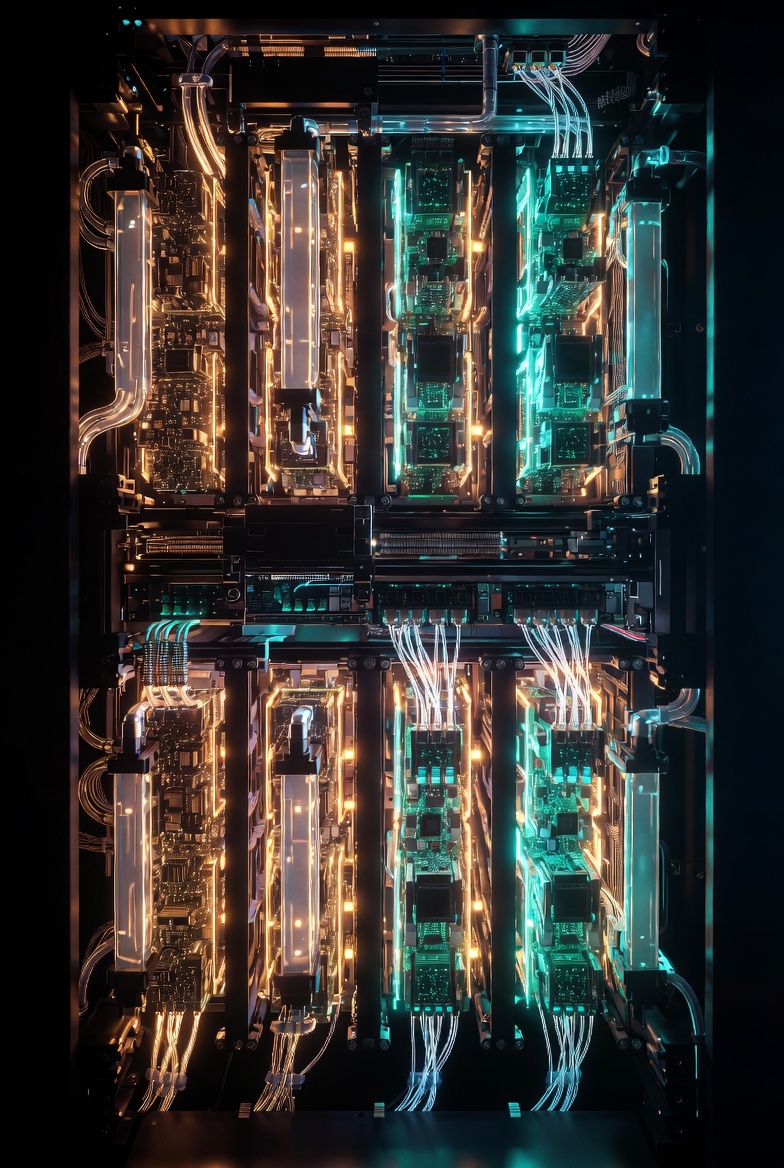
The hardware foundations of the AI ecosystem are being reinforced today through massive investments in liquid-cooled architectures and optical interconnects, as the industry moves away from air-cooled data centers toward "AI Factories".[16, 17] NVIDIA's Blackwell Ultra platform, specifically the GB300 NVL72, is currently being deployed as the "gold standard" for AI training and reasoning, offering a 50x performance boost and a 35x reduction in costs for agentic AI compared to the previous Hopper generation.[17, 18] This platform integrates 72 Blackwell Ultra GPUs and 36 Grace CPUs into a single, rack-scale system that delivers 1.5x more dense FP4 Tensor Core FLOPS.[17] Why this matters: The shift toward "Reasoning-Optimized Hardware" reflects the market's demand for real-time video generation and autonomous reasoning, which require massive memory capacity and accelerated "attention" performance.
To support these massive clusters, NVIDIA has invested $4 billion in optical technology providers Coherent and Lumentum to secure future interconnect capacity.[16] These multiyear strategic agreements combine capital with purchase commitments to ensure that the "bits that move data" between systems are available in volume as data center build-outs scale.[16] Optical interconnects are now seen as a critical solution to the bandwidth and thermal problems created by electrical links in sprawling AI clusters.[16] Why this matters: By engineering its own supply chain for optics, NVIDIA is effectively buying optionality and preventing the networking layer from becoming the next major bottleneck in the global AI infrastructure race.
Next-Generation AI Infrastructure Benchmarks (2026) | Platform / Technology | Key Specification | Operational Impact |
|---|---|---|---|
Compute Density | NVIDIA GB300 NVL72 | 72 Blackwell Ultra GPUs | 50x better Agentic performance |
Connectivity | Lumentum/Coherent Optics | Silicon Photonics Links | Drastically lower thermal penalty |
Energy Storage | Form Energy / Crusoe | 12 GWh multi-day storage | Stability for 24/7 AI Factories |
Edge Compute | ASUS PE3000N | NVIDIA Jetson Thor | 2,070 TFLOPS for Physical AI |
The energy demands of these AI factories are also driving innovative partnerships in the renewable sector. Form Energy and Crusoe have announced a deal to deliver 12 gigawatt-hours of multi-day energy storage systems to power AI data centers beginning next year.[19] This move is essential for stabilizing the power grid as massive, energy-intensive AI workloads become a permanent feature of global utility demand.[19] Why this matters: The "decoupling" of AI from the standard power grid through dedicated, long-duration storage is the only way for the industry to maintain its growth trajectory without triggering a backlash over energy consumption and environmental impact.
Furthermore, the hardware ecosystem is already looking toward the next horizon with the "Vera Rubin" platform, which is slated for a late 2026 launch.[20, 21] ASUS and GIGABYTE have already showcased liquid-cooled AI pods based on the Rubin architecture at GTC 2026, targeting "massive AI workloads" and "Physical AI" applications like surgical robotics and autonomous driving.[21, 22] The Rubin platform advances every pillar of the AI factory—compute, memory, storage, and networking—marking the transition from Earth-based centers to "Space-1" systems designed for orbital operations.[21] Why this matters: The move to orbital AI data centers and the continuous tripling of fleet sizes for autonomous vehicles indicate that the "physical footprint" of AI is expanding beyond the traditional limits of geography and climate.
Financial Dynamics: Pony AI and the Path to Profitability
The financial scrutiny of the AI sector is intensifying today as Pony AI reports its Q4 and Full Year 2025 financial results.[23, 24] Despite achieving unit economics breakeven in key markets like Guangzhou—where its Gen-7 Robotaxis generate 299 RMB per day—the company still faces heavy R&D burn, with net losses widening to over $61 million in the last reported quarter.[25] Pony AI is currently attempting to translate these per-vehicle wins into company-wide profitability by tripling its fleet size to over 3,000 units by the end of 2026.[25, 26] Why this matters: The "Pony AI Case" is a microcosm of the entire autonomous mobility sector, where the technology is proven at the unit level, but the path to a sustainable, profitable business model at scale remains fraught with execution risks.
Pony AI’s strategy relies on an "asset-light" partnership model, collaborating with operators like ONTIME and integrating with platforms like Tencent Mobility via WeChat mini-programs.[25, 27] This allows the company to scale without the proportional capital destruction of owning and maintaining its own massive fleet.[25] Analysts from firms like Macquarie and Citigroup maintain a "Buy" consensus on the stock, with price targets ranging as high as $32.80, driven by the belief that 2026 is the "starting point" for mass-market robotaxi commercialization.[24, 26] Why this matters: The success of this asset-light approach will determine whether the "Virtual Driver" model can succeed as a high-margin licensing business, similar to the software platforms of the previous decade.
Pony AI Financial and Operational Metrics (2025-2026) | Metric | Value / Status | Focus Area |
|---|---|---|---|
Unit Economics | Daily Net Revenue (Guangzhou) | 299 RMB ($41 USD) | Unit Breakeven achieved |
Fleet Scale | 2026 Year-End Target | 3,000+ Vehicles | Scaling for profitability |
R&D Burn | Q3 2025 Spending | $60.4 Million | 79.6% Year-over-Year increase |
Cash Reserves | Total Cash & Investments | $712.2 Million | Bolstered by Nov 2025 IPO |
The broader venture capital environment is also characterized by a massive backlog of AI companies "queueing up" to go public in 2026.[15, 28] Over 400 private tech companies are preparing for potential 2026 listings, spurred by improved market conditions and a need for liquidity among early VC backers.[15] High-profile firms like Anthropic and Cerebras are reportedly targeting 2026 dates, with Anthropic potentially launching one of the largest IPOs ever.[28] Why this matters: The impending "liquidity cycle" will serve as a definitive market valuation of the AI era, separating the "blockbuster" companies from those that have relied on cheap capital and hype to sustain their valuations.
However, some leading founders, including those at SpaceX and OpenAI, have proven that staying private no longer limits growth or access to capital, using secondaries and private debt as alternative liquidity tools.[15] This "OpenAI Model" suggests that for the most successful firms, the IPO has become an optional tool rather than a mandatory goal.[15] Why this matters: The shift toward "Permanent Privacy" for the industry's most critical players could lead to a two-tier AI market, where the most advanced technologies are controlled by opaque, private entities while the public markets trade in lower-margin application providers.
Regulatory Hardening: The EU AI Act and Institutional Oversight
As of March 2026, the global regulatory landscape is no longer in a "wait and see" phase; it has entered a period of active enforcement and institutional oversight.[3, 29] The EU AI Act is now partially in force, with obligations for prohibited practices and general-purpose AI models already applying to organizations operating within the bloc.[29] This regulation adopts a risk-based approach, where systems influencing access to credit, employment, and healthcare are treated as "High-Risk," requiring pre-deployment assessments and post-market monitoring.[2, 29] Why this matters: The convergence of AI regulation with existing data privacy laws like GDPR means that "AI Governance" is now a core function of corporate legal and privacy teams, rather than an optional compliance checkbox.
In the United States, the absence of a federal AI statute has led to a "patchwork" of state-level regulations that are beginning to shape enforcement expectations.[29, 30] California’s "Transparency in Frontier AI Act" (SB 53) and Texas’s "Responsible AI Governance Act" (TRAIGA) are now operational, imposing strict disclosure and safety protocols on developers.[30] For example, California now requires "frontier developers"—those with models trained using more than 1026 FLOPS—to publish risk frameworks and implement whistleblower protections, with penalties reaching $1 million per violation.[30] Why this matters: For organizations operating across the U.S., the cost of compliance is skyrocketing as they must navigate conflicting state requirements, leading to a "dual-track" approach to governance for global versus domestic operations.
Global AI Regulatory Status (March 2026) | Region | Status of Law | Key Enforcement Focus |
|---|---|---|---|
European Union | EU AI Act | Partially in force | High-Risk systems & Prohibited practices |
United States | State-Level (CA, TX, IL) | Effective Jan 1, 2026 | Transparency, Frontier Models, Employment |
China | Active Regime | In effect | Social stability & Domestic model deployment |
Latin America | Peru (Law), Others (Circulars) | Varies | Privacy fundamentals & Human oversight |
The ethical integrity of AI institutions is also under the microscope today, as the Charity Commission in the UK issued a formal warning to the Alan Turing Institute.[31] The watchdog’s intervention followed complaints from staff regarding the institute’s legal duties and governance, specifically as it pertains to its role as a top research institute.[31] While specific details of the staff's concerns were not fully disclosed, the formal guidance issued to trustees suggests a failure in the internal "check and balance" systems during the institute's rapid expansion.[31] Why this matters: As AI research institutes become central to national security and economic strategy, they are being held to the same standards of legal and fiscal accountability as traditional public institutions, ending the era of "academic immunity" for high-stakes tech research.
The industry is also grappling with the concept of "AI Literacy" as a form of operational governance.[3] Regulators, particularly in the Netherlands, have developed guidance that treats literacy not just as training but as "demonstrating control" over AI systems.[3] This involves a governance cycle of identifying AI use, setting expectations based on risk, and implementing practical evaluation and updates.[3] Why this matters: The shift from "documenting policies" to "operationalizing governance" is the final step in the maturation of the AI industry, where the ability to prove a system is safe is as valuable as the system’s raw performance.
The Professional Creative Future: Lyria 3 Pro and the Watermarked Era
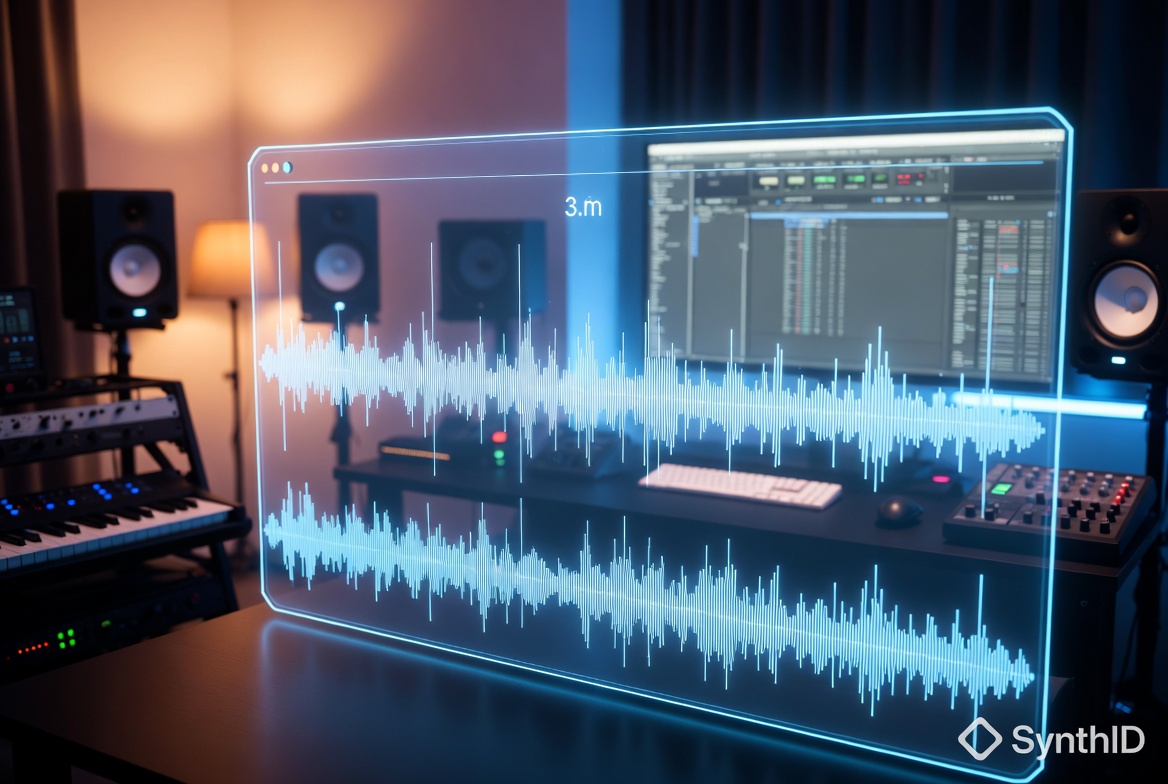
In the creative domain, Google DeepMind’s release of Lyria 3 Pro represents the most significant advance in professional audio generation to date.[32] This model moves beyond the experimental "30-second clips" that defined early AI music, allowing professionals to generate full tracks up to three minutes long with structural awareness of musical composition.[32] Integrated into platforms like Vertex AI and Google Vids, Lyria 3 Pro is designed for "enterprise-grade production workflows," where high-fidelity, customized audio can be scaled for gaming, marketing, and media.[32] Why this matters: By meeting creators in their existing tools—rather than as a standalone platform—Google is positioning AI as a legitimate "plugin" for the professional creative industry.
A critical component of this launch is the mandatory embedding of "SynthID," Google’s imperceptible watermark for AI-generated content.[32] This technical guardrail is designed to ensure that AI outputs can be tracked and identified, addressing the growing concerns around deepfakes and non-consensual media.[32] Furthermore, the model’s design prevents the mimicking of specific artists, treating prompts naming a creator as mere "broad inspiration" to avoid copyright infringements.[32] Why this matters: The implementation of robust watermarking and anti-mimicry filters is the only path forward for generative AI to gain acceptance in the highly litigious world of professional media and entertainment.
Lyria 3 Pro: Professional Integration Ecosystem | Integration Point | Functionality | User Benefit |
|---|---|---|---|
Vertex AI | Public Preview | On-demand audio at scale | Bespoke soundtracks for Gaming |
Google Vids | Workspace App | Custom background music | Rapid high-fidelity video production |
Gemini App | Paid Subscribers | Podcast & Vlog generation | Personalization for small-scale creators |
ProducerAI | Collaborative Tool | Agentic song iteration | AI-assisted artist development |
The broader trend in creative AI is the transition from "impressive demos" to "sustainable business models." While OpenAI’s Sora failed to monetize its video capabilities, Google is rolling out Lyria 3 Pro to a paying subscriber base across its Workspace and AI Pro tiers.[32] This "subscription-first" model, combined with high-utility integrations, appears to be the most viable path for generative media in 2026. Why this matters: The survival of generative creative tools now depends on their ability to integrate into established production pipelines, proving that "standalone virality" is no longer a substitute for professional utility.
Conclusion: The New Equilibrium of March 2026
The global artificial intelligence ecosystem on March 26, 2026, has reached a state of disciplined maturation. The high-profile shuttering of "side quests" like OpenAI's Sora and the redirection of resources toward enterprise logic and "Spud" models mark the end of the experimental phase of the 2020s.[6, 11] Today, the industry's leaders are those who command the physical infrastructure—the liquid-cooled, photonics-linked AI factories—and those who can navigate the complex regulatory "compliance cliff" that looms in the second half of this year.[2, 16]
From the agentic companions in the Galaxy S26 to the digital workers of IvyChat, AI has moved from a conversational curiosity to a background-running operating system for both personal life and global commerce.[1, 8] The focus for the remainder of 2026 will be the "Year of Execution," as companies like Pony AI attempt to prove that unit-level breakthroughs can be scaled into company-wide profits, and as the venture capital backlog finally clears through a wave of high-stakes IPOs.[15, 25]

--------------------------------------------------------------------------------
- FPT Recognized for Agentic AI at 2026 Artificial Intelligence Excellence Awards, https://fptsoftware.com/newsroom/news-and-press-releases/press-release/fpt-recognized-for-agentic-ai-at-2026-artificial-intelligence-excellence-awards
- EU and Luxembourg Update on the European Harmonised Rules on Artificial Intelligence—Recent Developments - K&L Gates, https://www.klgates.com/EU-and-Luxembourg-Update-on-the-European-Harmonised-Rules-on-Artificial-IntelligenceRecent-Developments-1-20-2026
- 2026 global AI trends: Six key developments shaping the next phase of AI - Dentons, https://www.dentons.com/en/insights/articles/2026/january/20/2026-global-ai-trends
- Clarivate Reveals the AI50 - the Organizations Leading Artificial ..., https://www.prnewswire.com/news-releases/clarivate-reveals-the-ai50--the-organizations-leading-artificial-intelligence-invention-302725393.html
- The Paradoxes of the European Union's AI Regulation | The Regulatory Review, https://www.theregreview.org/2026/03/10/rangone-the-paradoxes-of-the-european-unions-ai-regulation/
- Why OpenAI is shutting down its viral AI video app Sora | Explained ..., https://indianexpress.com/article/explained/explained-sci-tech/why-openai-is-shutting-down-ai-video-app-sora-10602192/
- Clarivate Reveals Top 100 Global Innovators 2026, https://clarivate.com/news/clarivate-reveals-top-100-global-innovators-2026/
- Samsung Advances Galaxy AI and Its Connected Ecosystem at MWC 2026, https://news.samsung.com/global/samsung-advances-galaxy-ai-and-its-connected-ecosystem-at-mwc-2026
- Data Points: Sora no more; OpenAI shuts down video maker - DeepLearning.AI, https://www.deeplearning.ai/the-batch/sora-no-more-openai-shuts-down-video-maker/
- OpenAI shuts down Sora, reportedly ending Disney partnership talks - Marketing-Interactive, https://www.marketing-interactive.com/openai-shuts-down-sora-reportedly-ending-disney-partnership-talks
- OpenAI shuts down Sora and ends partnership with Disney | УНН, https://unn.ua/en/amp/openai-shuts-down-sora-and-ends-partnership-with-disney
- OpenAI closes Sora video-making app and cancels $1bn Disney deal - MyJoyOnline, https://www.myjoyonline.com/openai-closes-sora-video-making-app-and-cancels-1bn-disney-deal/
- BREAKING: OpenAI Shutting Down Sora Video Platform Just Months After $1 Billion Disney Deal - WDW News Today, https://wdwnt.com/2026/03/breaking-openai-to-discontinue-sora-ai-video-platform/
- OpenAI Sora Shutdown: The Stunning Collapse of an AI Social Media Experiment - MEXC, https://www.mexc.com/news/979292
- Interest in AI has helped drive a massive increase in global M&A – will it rub off on IPOs?, https://www.venturecapitaljournal.com/interest-in-ai-has-helped-drive-a-massive-increase-in-global-ma-will-it-rub-off-on-ipos/
- Nvidia photonics investment backs Coherent and Lumentum ... - eeNews Europe, https://www.eenewseurope.com/en/nvidia-photonics-investment-coherent-lumentum/
- Designed for AI Reasoning Performance & Efficiency | NVIDIA GB300 NVL72, https://www.nvidia.com/en-us/data-center/gb300-nvl72/
- Giga Computing Shows Comprehensive Data Center Portfolio and Infrastructure at NVIDIA GTC 2026 - HPCwire, https://www.hpcwire.com/off-the-wire/giga-computing-shows-comprehensive-data-center-portfolio-and-infrastructure-at-nvidia-gtc-2026/
- Form Energy Signs Deal to Power AI Data Centers | News, Sports, Jobs - The Intelligencer, https://www.theintelligencer.net/news/top-headlines/2026/03/form-energy-signs-deal-to-power-ai-data-centers/
- The Architect of the Intelligence Age: NVIDIA's High-Stakes Earnings and the Road to $5 Trillion - chroniclejournal.com, http://markets.chroniclejournal.com/chroniclejournal/article/finterra-2026-3-24-the-architect-of-the-intelligence-age-nvidias-high-stakes-earnings-and-the-road-to-5-trillion
- NVIDIA GTC 2026: Live Updates on What's Next in AI, https://blogs.nvidia.com/blog/gtc-2026-news/
- Nvidia GTC 2026: ASUS Unveils Game-Changing Liquid-Cooled AI Infrastructure Powered by Nvidia Vera Rubin Platform - Storage Newsletter, https://www.storagenewsletter.com/2026/03/20/nvidia-gtc-2026-asus-unveils-game-changing-liquid-cooled-ai-infrastructure-powered-by-nvidia-vera-rubin-platform/
- PONY Q4 2025 Earnings Report on 3/26/2026 - MarketBeat, https://www.marketbeat.com/earnings/reports/2026-3-26-pony-ai-inc-stock/
- Pony AI Inc. to Announce Q4 and Full Year 2025 Financial Results on March 26, 2026, https://www.quiverquant.com/news/Pony+AI+Inc.+to+Announce+Q4+and+Full+Year+2025+Financial+Results+on+March+26,+2026
- Is There a Path for Pony AI to Achieve Profitability? - 24/7 Wall St., https://247wallst.com/investing/2026/03/25/is-there-a-path-for-pony-ai-to-achieve-profitability/
- Pony AI Set to Announce Q4 Earnings with Strong EPS Growth, https://intellectia.ai/news/stock/pony-ai-set-to-announce-q4-earnings-with-strong-eps-growth
- Pony.ai to Report Q4 and FY 2025 Financial Results on March 26, 2026 | Intellectia.AI, https://intellectia.ai/news/etf/ponyai-to-report-q4-and-fy-2025-financial-results-on-march-26-2026
- Tech IPO Calendar for 2026 - Forge Global, https://forgeglobal.com/tech-ipo-calendar-2026/
- Where AI Regulation is Heading in 2026: A Global Outlook | Blog | OneTrust, https://www.onetrust.com/blog/where-ai-regulation-is-heading-in-2026-a-global-outlook/
- U.S. Artificial Intelligence Law Update: Navigating the Evolving State and Federal Regulatory Landscape | Thought Leadership | January 2026 | Baker Botts, https://www.bakerbotts.com/thought-leadership/publications/2026/january/us-ai-law-update
- AI (artificial intelligence) | The Guardian, https://www.theguardian.com/technology/artificialintelligenceai
- Google Embeds Lyria 3 Pro AI Music into Pro ... - The Tech Buzz, https://www.techbuzz.ai/articles/google-embeds-lyria-3-pro-ai-music-into-pro-workflows
Recommended AI tools

Claude
Conversational AI
Your trusted AI collaborator for coding, research, productivity, and enterprise challenges

Suno AI
Music Generation
Make any song you can imagine

Notebook LLM
Productivity & Collaboration
Turn complexity into clarity with your AI-powered research and thinking partner
AutoGPT
Productivity & Collaboration
Build, deploy, and manage autonomous AI agents – automate anything, effortlessly.

Grammarly
Writing & Translation
Your AI writing partner for work

Microsoft Copilot
Conversational AI
Your everyday AI companion for work, learning, and creativity
About the Author

Albert Schaper is a co-founder of Best-AI.org. He focuses on product strategy, AI adoption, practical tool selection, and educational content that helps users compare AI products with clearer context.
More from AlbertWas this article helpful?
Found outdated info or have suggestions? Send us a note.