Jetpack Compose Glimmer: Building Immersive Spatial UI for AI Glasses
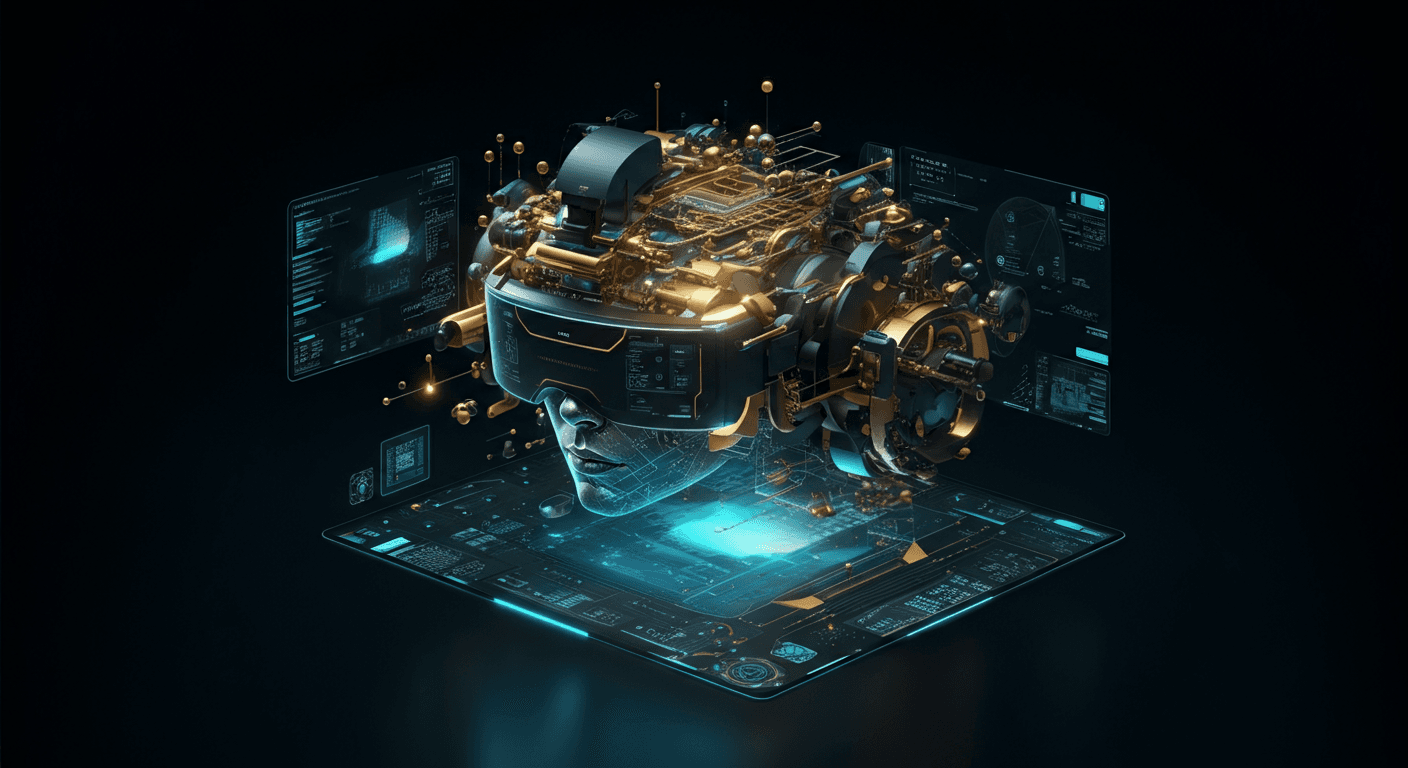
Is spatial UI the next frontier in how we interact with AI?
Understanding Spatial UI
Spatial UI, or spatial user interface, refers to a 3D interface that extends beyond traditional 2D screens. It uses augmented or virtual reality to create immersive experiences. This is especially significant for AI glasses, moving beyond simple notifications to interactive, contextual environments. A spatial user interface definition in this context involves projecting interactive elements into the user's real-world view.From 2D to 3D
The evolution of UI design has been dramatic.- Early interfaces were text-based, relying on command lines.
- Graphical User Interfaces (GUIs) brought us windows and icons.
- Now, augmented reality is blending digital information with the real world.
Challenges and Opportunities

Spatial computing presents unique challenges, including:
- Ergonomics: Designing comfortable and intuitive interactions.
- Context: Understanding the user's environment.
- Performance: Rendering complex 3D graphics in real-time.
As UI evolves, understanding these opportunities is crucial for shaping the future of how we engage with AI through augmented reality interfaces. Explore our Design AI Tools to learn more.
Is Google about to revolutionize our spatial reality?
Introducing Jetpack Compose Glimmer
Jetpack Compose Glimmer is Google's UI toolkit designed for building immersive spatial interfaces. It is specifically tailored for AI glasses and other augmented reality devices.Glimmer's Architecture
Glimmer boasts an innovative architecture built around composable functions.- It uses declarative UI principles, simplifying UI creation.
- Its core components include elements for spatial layout, gesture recognition, and 3D rendering.
-
Glimmerenhances traditional UI frameworks through a design for spatial applications.
Advantages of Glimmer
Compared to traditional UI frameworks, Jetpack Compose Glimmer offers several benefits:- Enhanced performance on resource-constrained devices.
- Improved developer productivity with a modern, Kotlin-based API.
- Seamless integration with Android and the Jetpack Compose ecosystem.
Integration with Android

Android spatial UI development gets a boost as Glimmer leverages existing Android tools and libraries. This allows developers to easily port existing apps and UI components to spatial environments. Glimmer is set to be the Google AI glasses UI framework of choice.
Jetpack Compose Glimmer provides a promising avenue for building user interfaces for spatial computing. This technology streamlines Android spatial UI development. Explore our AI Tool Directory to find tools to enhance your spatial interface projects.
Is Jetpack Compose Glimmer poised to revolutionize spatial UI for AI glasses? Let's explore its features.
Key Features and Capabilities of Jetpack Compose Glimmer
Jetpack Compose Glimmer brings cutting-edge functionalities to spatial user interfaces. It aims to create immersive experiences on platforms like AI glasses.
3D Object Rendering and Manipulation
Glimmer supports rendering and manipulating 3D objects in a spatial environment. This enables developers to create interactive, visually rich interfaces.
- Users can directly interact with virtual objects.
- It allows for complex animations and simulations.
- Imagine manipulating virtual molecules in a chemistry simulation.
Gesture Recognition and Voice Control
Glimmer incorporates gesture recognition and voice control for intuitive spatial interaction. Software Developer Tools would find this particularly useful.
- Enables hands-free control.
- Voice commands add accessibility.
- Think of controlling your smart home simply by gesturing.
Advanced Animation and Transition Effects
The framework offers advanced animation and transition effects to create smooth and engaging user experiences. These features make spatial interfaces more fluid.
Immersive interfaces rely heavily on smooth animations and transitions.
Data Binding and State Management
Glimmer provides data binding and state management within the framework. This simplifies UI updates and ensures consistency between data and presentation.
- Automatic UI updates on data changes.
- Easier management of complex states.
- Imagine real-time data updates reflecting in your AI glasses display.
Harnessing the power of AI in immersive spatial environments just got easier.
Setting Up Your Glimmer Development Environment
To start, you'll need to set up your development environment. This involves installing the Glimmer SDK. Follow the official documentation for Glimmer SDK installation to ensure a smooth setup. This SDK is specifically designed for spatial UI development.
- Download the SDK.
- Configure your IDE (e.g., Android Studio).
- Set up the necessary emulators for testing.
Creating a Simple Spatial UI Application
With the environment configured, you can begin creating your first spatial UI application. Using Glimmer’s declarative syntax makes this process efficient. You describe the UI elements and their spatial arrangement, and Glimmer handles the rendering.
Glimmer's declarative approach simplifies UI development, allowing you to focus on the user experience rather than low-level rendering details.
- Define your UI components.
- Specify their position and orientation in 3D space.
- Use Glimmer's layout primitives for structure.
Implementing Interactive Elements
Interactive elements are key to any spatial UI. Implementing interactive elements and handling user input is crucial for user engagement. Glimmer interactive elements can be easily implemented using Glimmer's event handling system.- Add event listeners for user actions (e.g., gaze, touch).
- Modify UI elements in response to these events.
- Consider spatial context when handling input.
Debugging and Testing
Debugging Glimmer applications requires specialized tools. When debugging Glimmer applications, emulators and physical devices are essential for effective testing. Use the debugging tools provided by the SDK to identify and fix issues in your spatial UI.
- Use emulators to test different device configurations.
- Test on physical AI glasses for real-world feedback.
- Leverage debugging overlays to visualize spatial data.
Is Jetpack Compose ready to revolutionize spatial UI for AI glasses?
Strategies for Optimizing 3D Models
Crafting immersive spatial UIs for AI glasses demands meticulous optimization. Reducing polygon count in 3D models is key. Lower resolution textures and efficient UV mapping can significantly improve real-time rendering. For example, consider using decimated models where detail is less critical.- Optimize 3D geometry
- Reduce texture size
- Use texture atlases
- Implement level of detail (LOD)
Minimizing Latency in Spatial UI
Latency is the nemesis of a smooth spatial user experience.
Techniques like predictive tracking, asynchronous processing, and optimized rendering pipelines are crucial. Reducing network calls and caching data locally can dramatically improve responsiveness. Minimizing latency in spatial UI is critical for user comfort. The Guide to Finding the Best AI Tool Directory can help you explore additional resources.
Designing Intuitive and Accessible Interfaces
Good spatial UI design prioritizes ease of use.- Employ clear visual cues.
- Provide haptic feedback.
- Keep interactions simple.
Addressing Motion Sickness and User Fatigue
VR/AR applications can induce motion sickness. Minimize rapid, unexpected movements. Use subtle animations and provide stable reference points. User fatigue is also a concern; design shorter, focused interactions and provide rest periods. AI in practice can assist in creating human-centered AI implementations.Optimizing spatial UI demands a holistic approach, balancing performance, usability, and accessibility. Explore our Design AI Tools category for inspiration.
Sure, I can help you write a section about Jetpack Compose Glimmer and its potential in spatial computing!
The Future of Spatial Computing: Glimmer's Role in Shaping the Metaverse
Can Jetpack Compose Glimmer unlock the full potential of AI glasses in the metaverse?
Unveiling Jetpack Compose Glimmer
Jetpack Compose Glimmer is Google's toolkit for crafting spatial user interfaces. Imagine designing interactive 3D experiences for AI glasses! It's all about intuitive, immersive interfaces.Emerging Trends in Spatial UI
Several trends are reshaping spatial UI:- AI-powered assistance: Imagine AI assistants seamlessly integrated into your spatial environment.
- Gesture recognition: Interacting with digital content using natural hand movements.
- Seamless cross-platform experiences: Moving between devices and virtual spaces effortlessly.
Ethical Considerations
As spatial computing becomes more pervasive, ethical considerations are paramount. Data privacy, accessibility, and the potential for digital divides need careful consideration. We must ensure spatial UI enhances human experience rather than creates new inequalities.Predicting the Future
The future of spatial interfaces is bright. We can anticipate:- More personalized and adaptive user experiences
- Increased integration of AI and spatial computing
- A blurring of lines between the physical and digital worlds
Glimmer's role in shaping the metaverse could be significant. Explore our Software Developer Tools category.
Here's a question to ponder: can AI glasses unlock a new dimension of user interaction?
Glimmer vs. the Competition: A Comparative Analysis
Jetpack Compose Glimmer, a framework designed for spatial UI, is entering a competitive landscape. It aims to provide developers with tools to create immersive user experiences for AI glasses. Let's see how it stacks up against alternatives.
Spatial UI Frameworks: A Head-to-Head
Other established frameworks in this space include Unity and Unreal Engine. How does Glimmer compare?- Performance: Glimmer, built on Jetpack Compose, should offer excellent native performance. However, Unity and Unreal Engine are known for their optimized rendering pipelines.
- Features: Unity and Unreal Engine boast comprehensive feature sets for 3D rendering, physics, and animation. Glimmer likely focuses more on UI-specific components.
- Ecosystem: Unity and Unreal Engine have massive asset stores and developer communities.
Framework Suitability
The choice depends on the project.- Glimmer may be ideal for UI-centric applications where performance and integration with Android are key.
- Unity and Unreal Engine are better suited for graphically intensive applications and games.
Explore our Software Developer Tools for more options.
Keywords
Jetpack Compose Glimmer, spatial UI, AI glasses, spatial computing, augmented reality, virtual reality, UI framework, Glimmer SDK, immersive experiences, 3D user interface, Google AI, Android development, metaverse UI, next-generation UI, spatial app development
Hashtags
#JetpackCompose #SpatialUI #AIGlasses #SpatialComputing #AugmentedReality
Recommended AI tools

Google Gemini
Conversational AI
Your everyday Google AI assistant for creativity, research, and productivity

ChatGPT
Conversational AI
AI research, productivity, and conversation—smarter thinking, deeper insights.

Perplexity
Search & Discovery
Clear answers from reliable sources, powered by AI.

Claude
Conversational AI
Your trusted AI collaborator for coding, research, productivity, and enterprise challenges

OpenClaw AI Agent
Productivity & Collaboration
The AI that actually does things.

Cursor
Code Assistance
Your coding agent for building ambitious software
About the Author

Written by
Dr. William Bobos
Dr. William Bobos (known as 'Dr. Bob') is a contributor focused on practical AI tool analysis, research context, and clear summaries for builders and decision-makers.
More from Dr.Was this article helpful?
Found outdated info or have suggestions? Send us a note.